Ship real apps with AI,
starting from zero.
The step-by-step course behind 11 live apps I built by talking to my editor. Take a 2-minute quiz and get your own path: from "what's a server?" to a live app on your own domain, with accounts, payments and email when you need them.
Wherever you're starting, there's a path
The quiz works out which of these you are, then hands you only the lessons you need.
"I've never written code"
You start with how the web actually works and your two tools. Nothing is assumed, every word is explained, and every lesson ends with something working.
"I can tinker a bit"
Skip the basics. Learn to turn a messy dataset into an app, put it on your own server, and add logins or payments when it's worth it.
"I code, but never ship"
The fast track: the one-box deploy pattern, accounts, Stripe, email that lands, analytics. The parts nobody hands you.
You have the ideas. Shipping is the wall 😬
AI can write the code now. So why is there still nothing live? Because the code was never the hard part. It's everything around it.
❌ How it usually dies
- ❌ The data you needed doesn't exist, or isn't allowed
- ❌ The AI builds a 12-service monster you can't deploy
- ❌ "Just deploy it" becomes a week of DNS errors and 502s
- ❌ Per-app hosting bills creep past what it earns
- ❌ Months later: a localhost demo nobody can open
✅ The way this course does it
- ✅ Vet the data first, in 20 minutes
- ✅ Build the laziest thing that works: often one HTML file
- ✅ One small server, one reverse proxy, every app you ever make
- ✅ A flat few dollars a month for the whole fleet
- ✅ A real URL, with real users, in evenings, not months
I'm not a 10× engineer. I'm a data person who got tired of dashboards dying on localhost. This is the system that finally got them out the door.
How it works
Three steps. The second one is where the work happens, ten to thirty minutes at a time.
Take the 2-minute quiz
Six plain-English questions. You get your path: which lessons, in what order, and why each one is there.
One lesson at a time
Read it, do the "your turn" checklist, tick it off. Want a nudge? I'll email one lesson every few days, in your order.
Ship something real
The finish line is a live app on your own domain that strangers can open. Then the next one takes an evening.
🧭 The screener quiz
Don't read 26 lessons. Read yours.
Never touched a terminal? You get the gentle on-ramp. Already deploy for a living? You skip straight to the parts that are new to you. Want people to pay, log in, or install it on their phone? Those lessons join your path, with the reason spelled out.
No signup to see your result. Email it to yourself only if you want to.
Everything that's inside 📦
26 lessons in 7 parts, written from the real build notes of a live app fleet. The quiz picks the ones you need; all of them are open to everyone.
🌱 Start from zero 4 lessons · What the web actually is, your tools, and the lazy method: how to work with an AI that writes the code for you.
💡 Idea & data 2 lessons · Pick an idea the data can actually carry, and decide what you'll claim before you build anything.
🧱 Build it small 4 lessons · One HTML file, checks that catch the AI's quiet mistakes, pages that work on a phone, and maps when your data wants them.
🚀 Ship it live 4 lessons · Your own server, one shared front door, a real URL with HTTPS, analytics from day one, and an honest launch.
👥 Users & money 5 lessons · The smallest backend that works, one login for every app, email that arrives, sync that never loses work, and getting paid safely.
📣 Grow & reach 4 lessons · A list you own, pages Google can read, and a spot on their home screen, with reminders, or in Google Play.
🛡️ Scale & operate 3 lessons · Big public files, live feeds, and keeping one small server boring: backups you've restored, secrets, incidents.
The stack you'll actually use 🧰
Boring, cheap, durable. The same pieces behind every app in the fleet, and every lesson shows you the prompts to drive them.
🖥️ VS Code + Claude Code
Your editor, and an AI that writes the code inside it while you steer.
🦥 The lazy method
A ladder (and a plugin) that stops the AI from over-building.
🌐 One small VPS
A few dollars a month hosts every app you'll ever build.
🔁 Caddy
One reverse proxy, automatic HTTPS, a few lines per app.
🤖 The Hostinger MCP
Claude adds your DNS and checks your server by chat.
👤 PocketBase
One login across all your apps, without writing auth.
💳 Stripe
Hosted checkout and billing portal, enforced by your server.
✉️ Your own email
A mailbox on your domain that lands in inboxes, plus a list.
📊 Umami
Private, cookieless analytics you host yourself.
The proof is live. Go open it 👇
Not screenshots of a localhost demo. Real apps on real domains, each one built with what's in this course, and each one teaching a lesson.
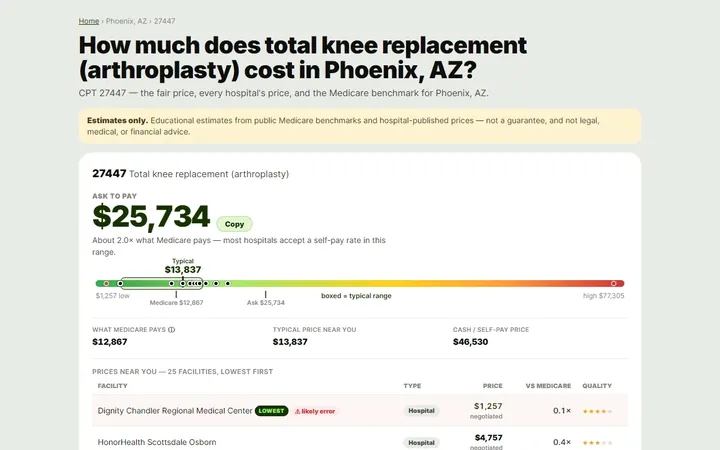
🏥 Healthcare prices live
Hospital cash prices next to Medicare benchmarks, across six states.
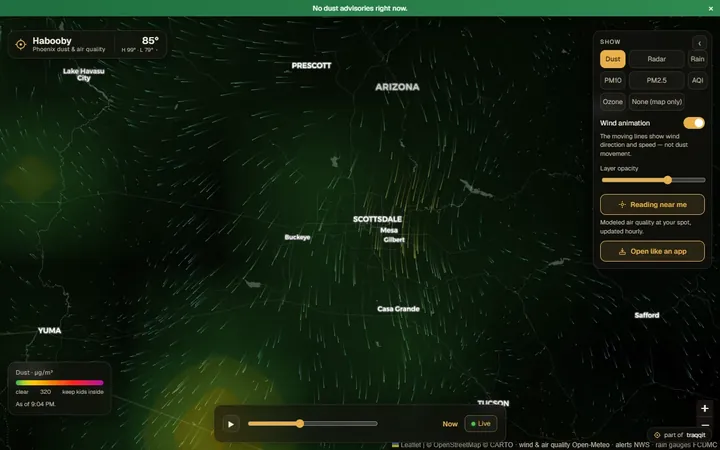
Teaches: big data on a small server🌪️ Habooby live
A live, windy.com-style map of Phoenix dust storms and air quality.
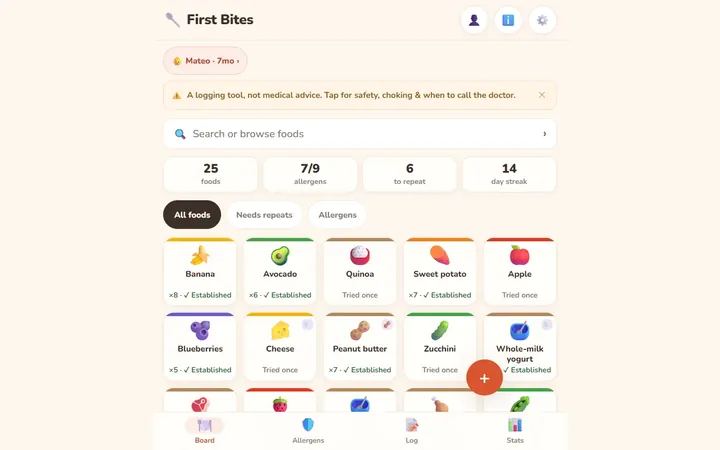
Teaches: maps without rate-limit pain🥄 First Bites live
A baby-food and allergen tracker families share, installable on phones.
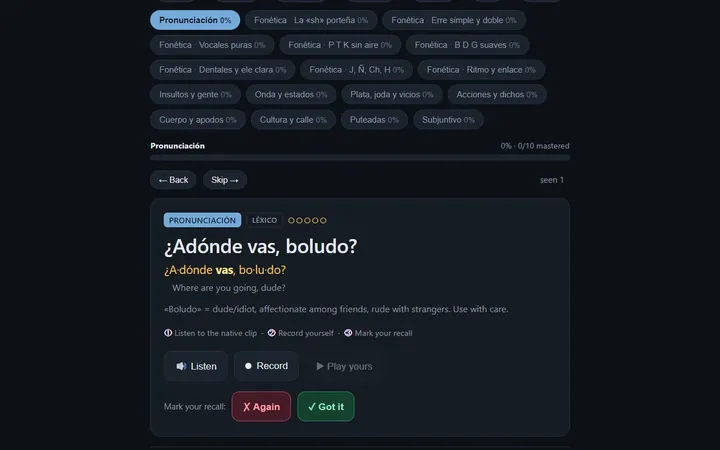
Teaches: accounts, sharing, Play Store🗣️ Acento live
An Argentine Spanish accent trainer with native voices and scoring.
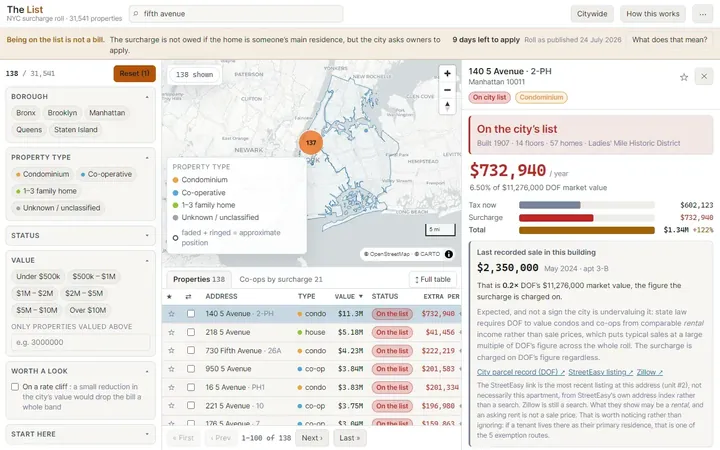
Teaches: Pro plans with Stripe🗽 The List live
New York's pied-à-terre tax roll, 31,541 properties, made searchable.
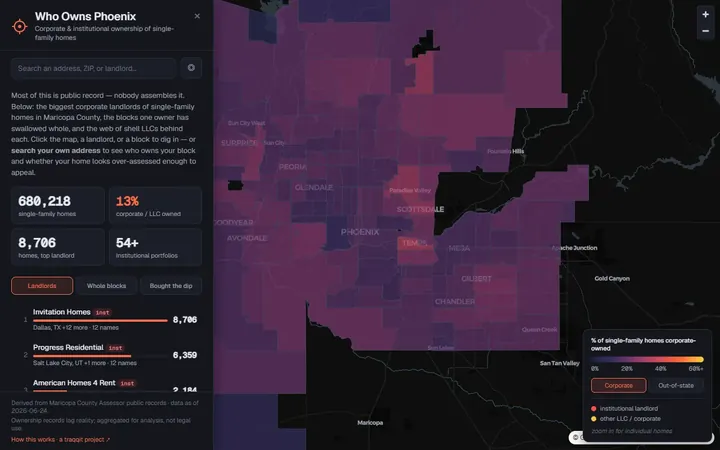
Teaches: precompute, then go static🏠 Who Owns Phoenix live
The corporate and shell-LLC landlords behind Phoenix homes.
Teaches: vetting free public data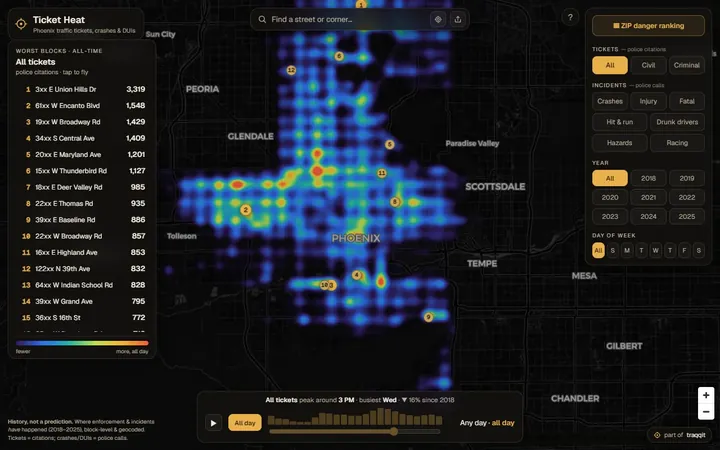
🚦 Ticket Heat live
Where and when Phoenix writes tickets, plus crashes and DUIs.
Teaches: geocoding messy addresses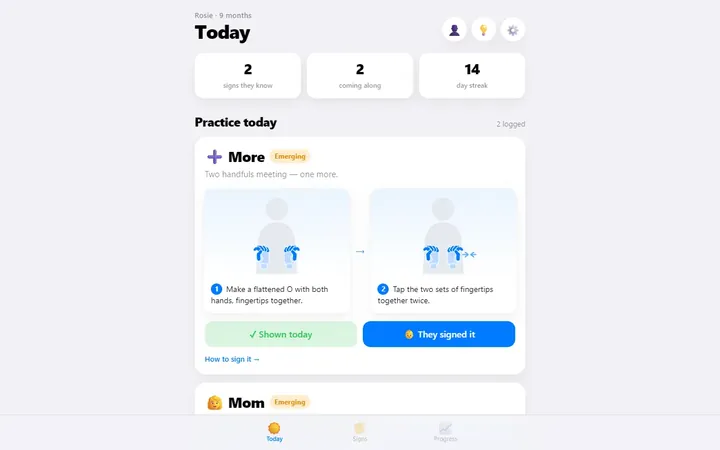
👋 Baby Signs live
110 real ASL signs, drawn as start and end frames, with practice reminders.
Teaches: push notifications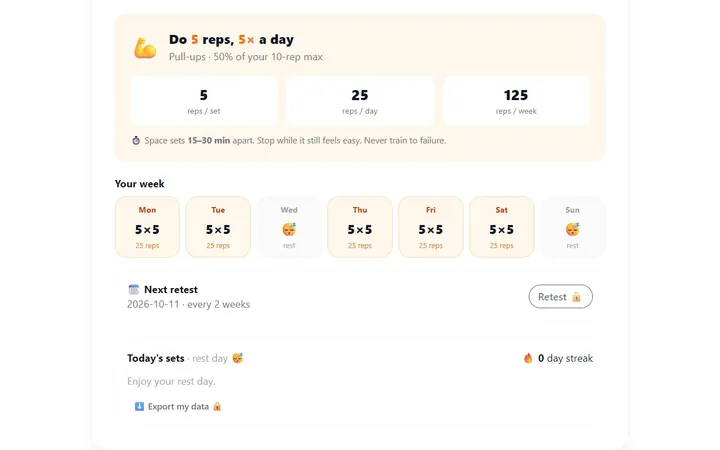
🏋️ Grease the Groove live
A strength method turned into a calculated daily plan.
Teaches: logic you can trust…plus Handstand, travelmap, and more at traqqit.com.
Rather have it one lesson at a time?
Take the quiz and I'll email your path, then one short lesson every few days in your order, so you actually finish. One-click unsubscribe, never sold.
Alex Halloran
Data Hound · maker of the traqqit fleet
"I'm a data person, not a rock-star engineer. For years my projects died on localhost: cool dashboard, never shipped. Then I started treating my editor like a pair I talk to, kept the stack stupidly lazy, and put everything on one cheap box behind one reverse proxy. Now I have a fleet of live apps, some with logins, payments and phone installs. This course is that loop written down, including every mistake that cost me an evening, so it doesn't cost you one. If the apps above don't convince you it works, nothing I say will."
Building in the open at traqqit.com
What it actually costs
The course is free. Running your apps isn't quite, but it's close. Honest numbers:
Everything else in the stack (Caddy, PocketBase, Umami) is free and open source. Stripe only takes a cut when you get paid.
Questions, answered
I've never written a line of code. Is this really for me?
Yes. That's the first person the course was written for. The early lessons explain what a server, a domain and a terminal actually are, every technical word is defined where it appears (and in the glossary), and the quiz starts you at the right place. Claude Code writes the code; you learn to steer it, check it, and ship it.
Is it really free? What's the catch?
Completely free: no paywall, no upsell, no "premium tier". I'm a maker giving back what I figured out the hard way. If you want to follow what I build next, that's the only ask.
Do I need an account?
No. Every lesson is open with no signup. Your checkmarks save on your device. A free account just syncs them (and your path) across devices, and it's an email and password, never a card.
What do the emails look like? Will you spam me?
If you ask for your path by email, you get it once, then one short lesson email every few days (you pick the pace in the quiz), in the order that fits you. When your path is done, I only write when there's something genuinely new. Every email has one-click unsubscribe, and I never sell or share your address. Details in the privacy page.
How long does it take?
Lessons are 10 to 30 minutes each. Most people's path is somewhere between 13 and 22 lessons, so a few hours of reading plus the time you spend building (the setup, server and deploy lessons take a first-timer an hour or two of hands-on time each). At a lesson every couple of days you'll have something live within a few weeks of evenings.
Why Claude Code and Hostinger? Do I have to use them?
They're what I actually use for every app in the fleet, so that's what I can show you honestly, step by step, including the Hostinger MCP that lets Claude manage DNS and servers by chat. The ideas (static-first, one box, one reverse proxy, server-enforced payments) work with any AI tool and any VPS.
What if I get stuck?
Every lesson shows the exact prompts to give Claude, and most "stuck" moments are covered in a warning box because I hit them first. Still stuck? Email me at alex@datahoundtech.com. A real person reads it.
Stop demoing on localhost.
Ship something live.
Two minutes from now you'll know exactly what to learn first.
Free · no signup to read · beginners welcome